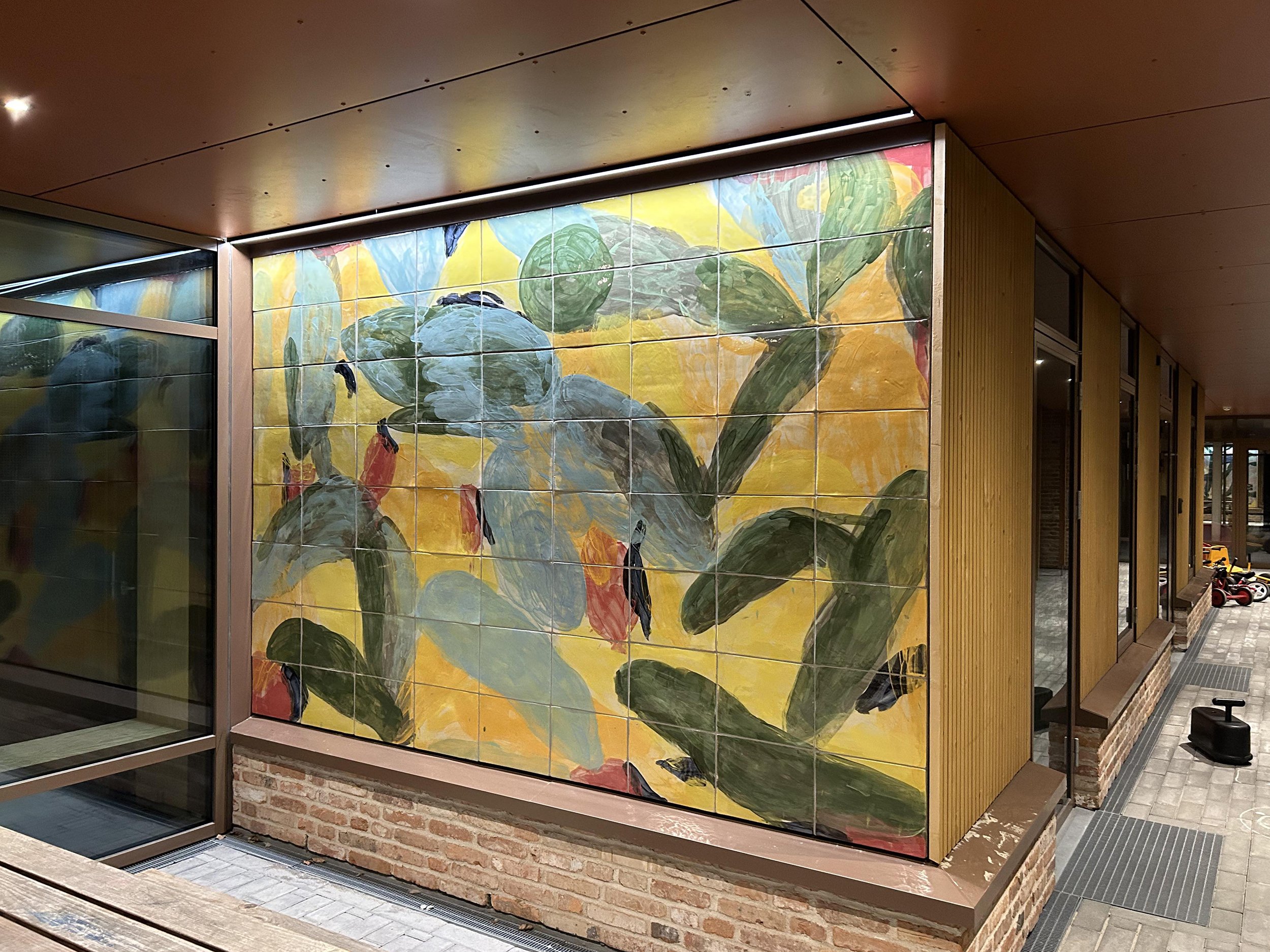
Cycles & Transformation
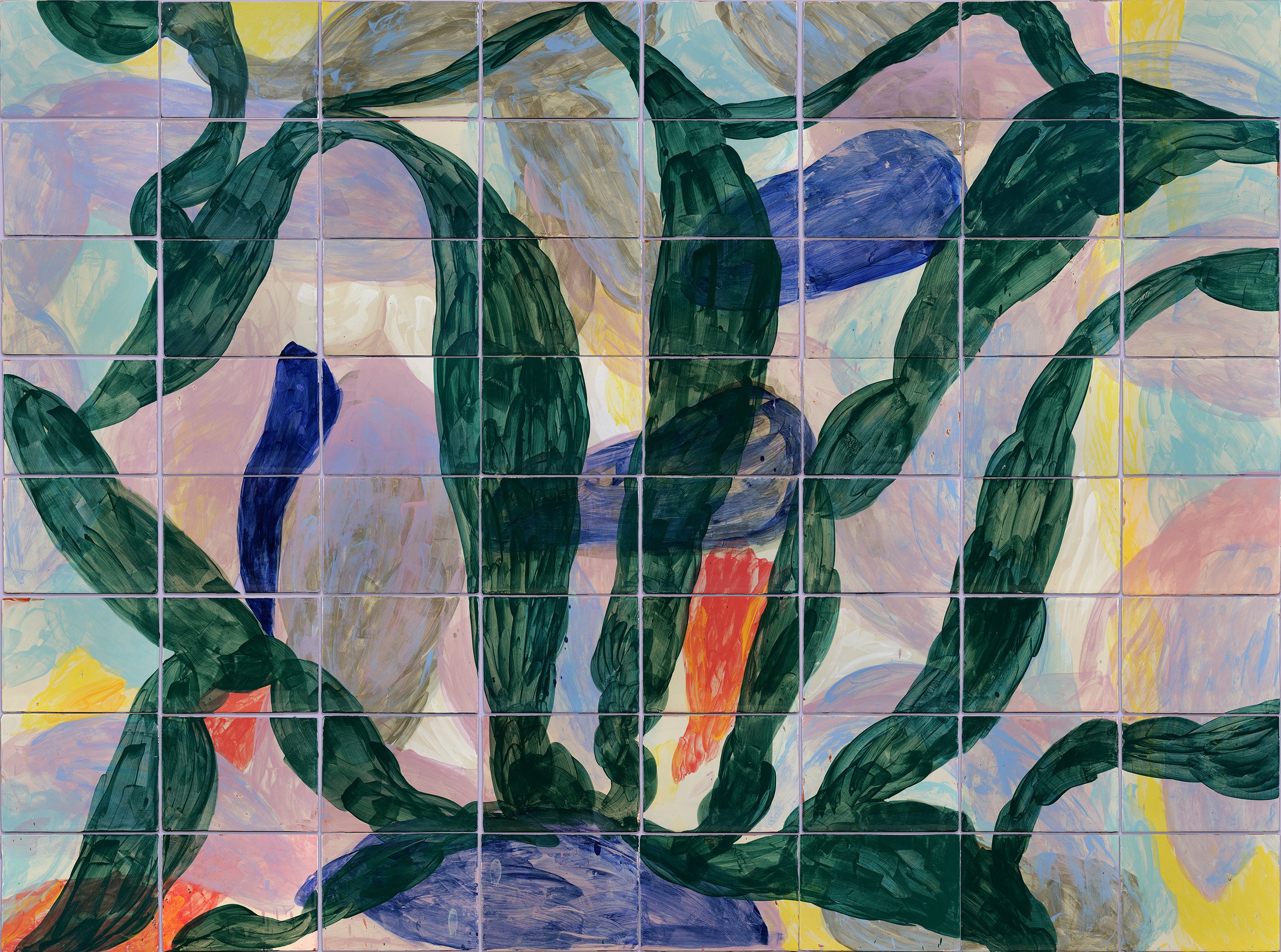
Cycles & Transformation, Part 1
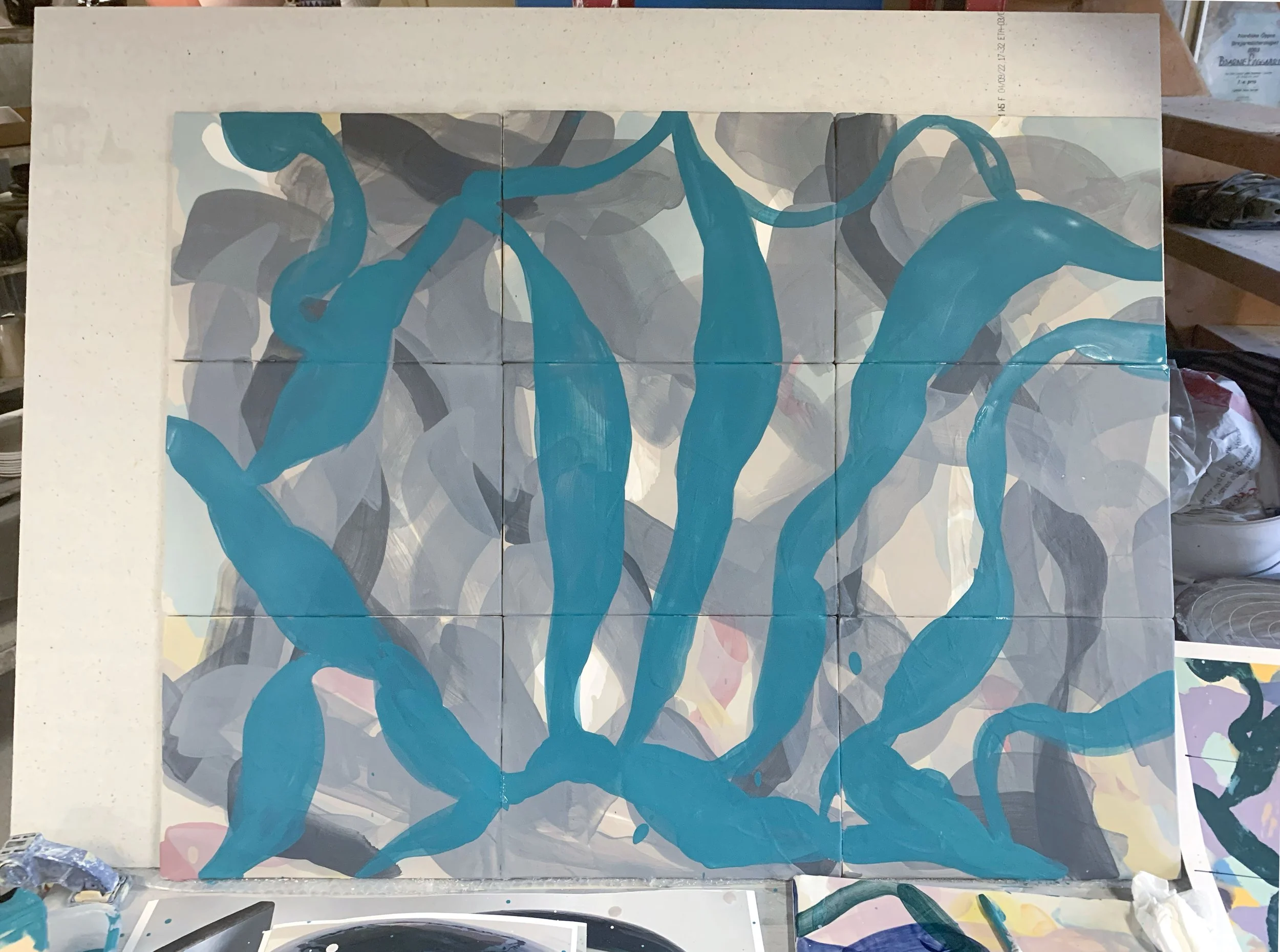
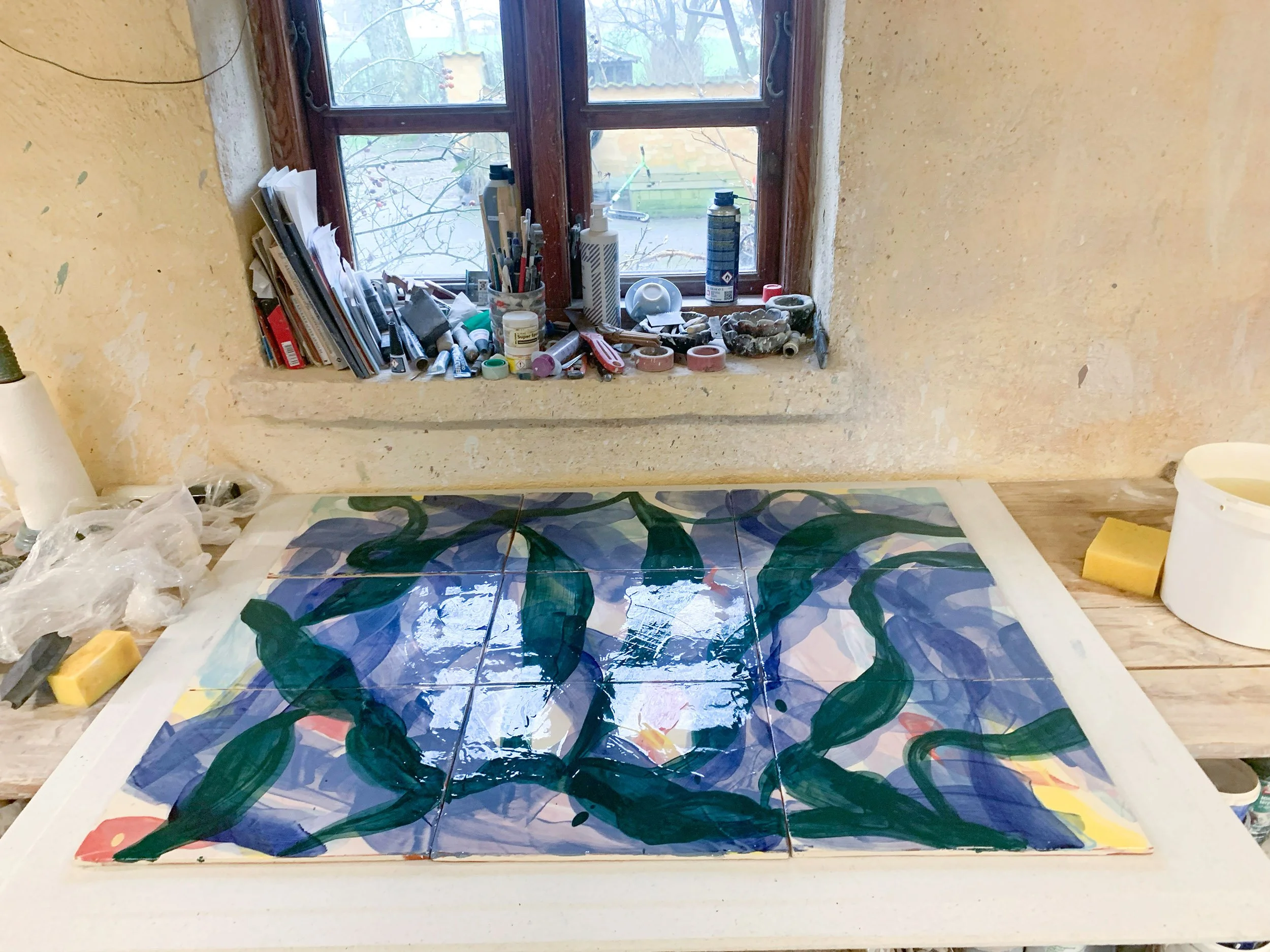
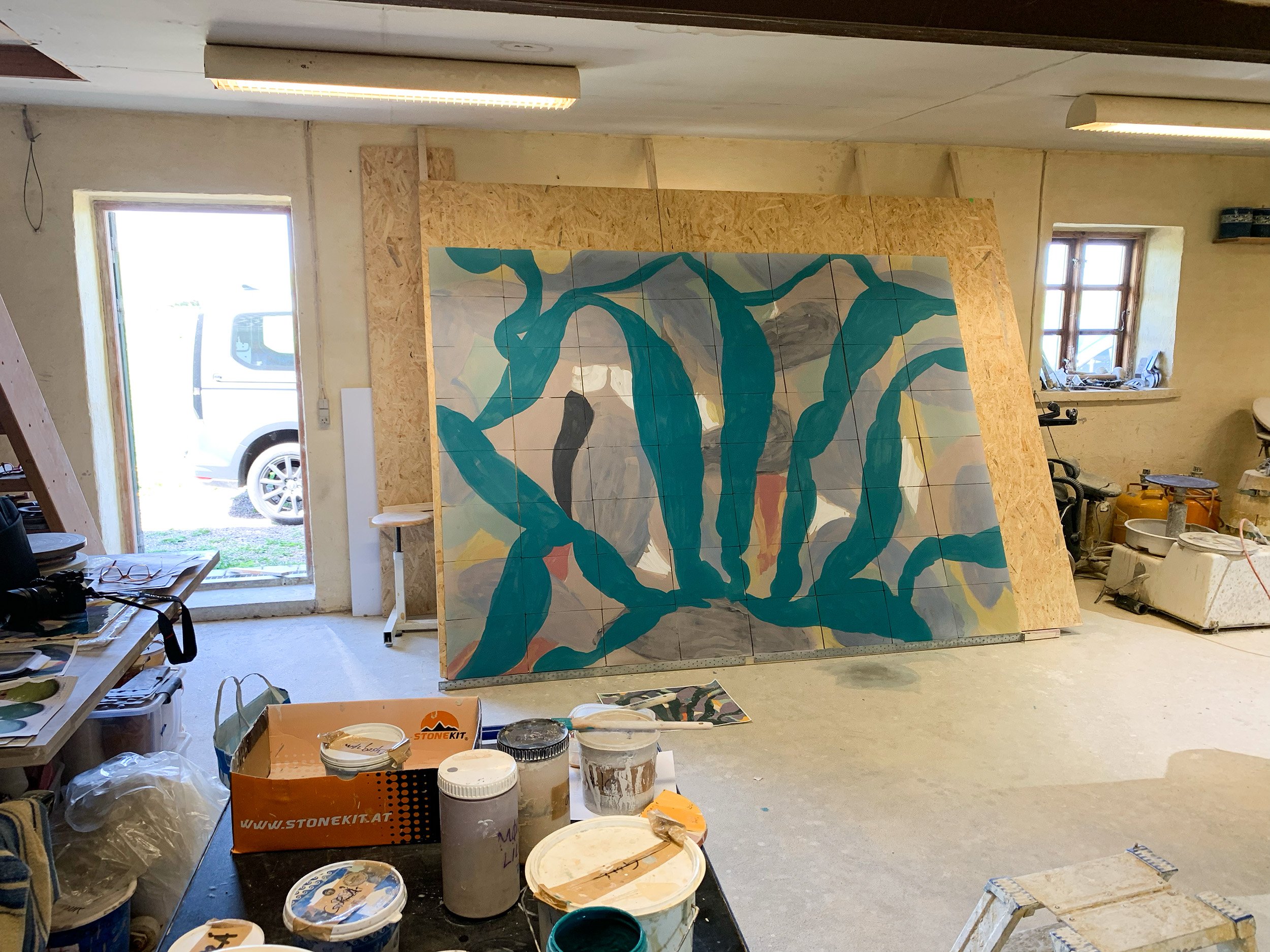
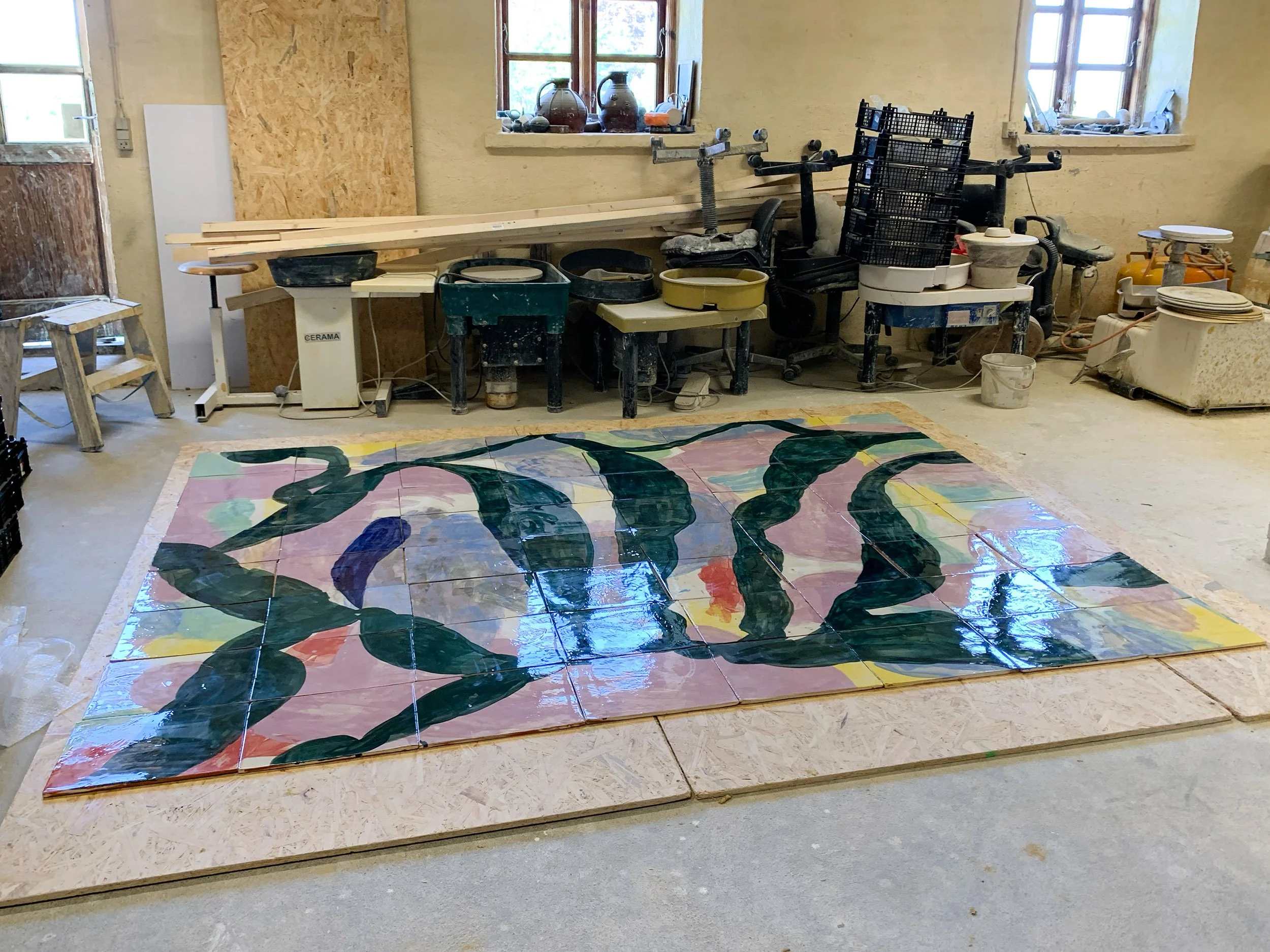
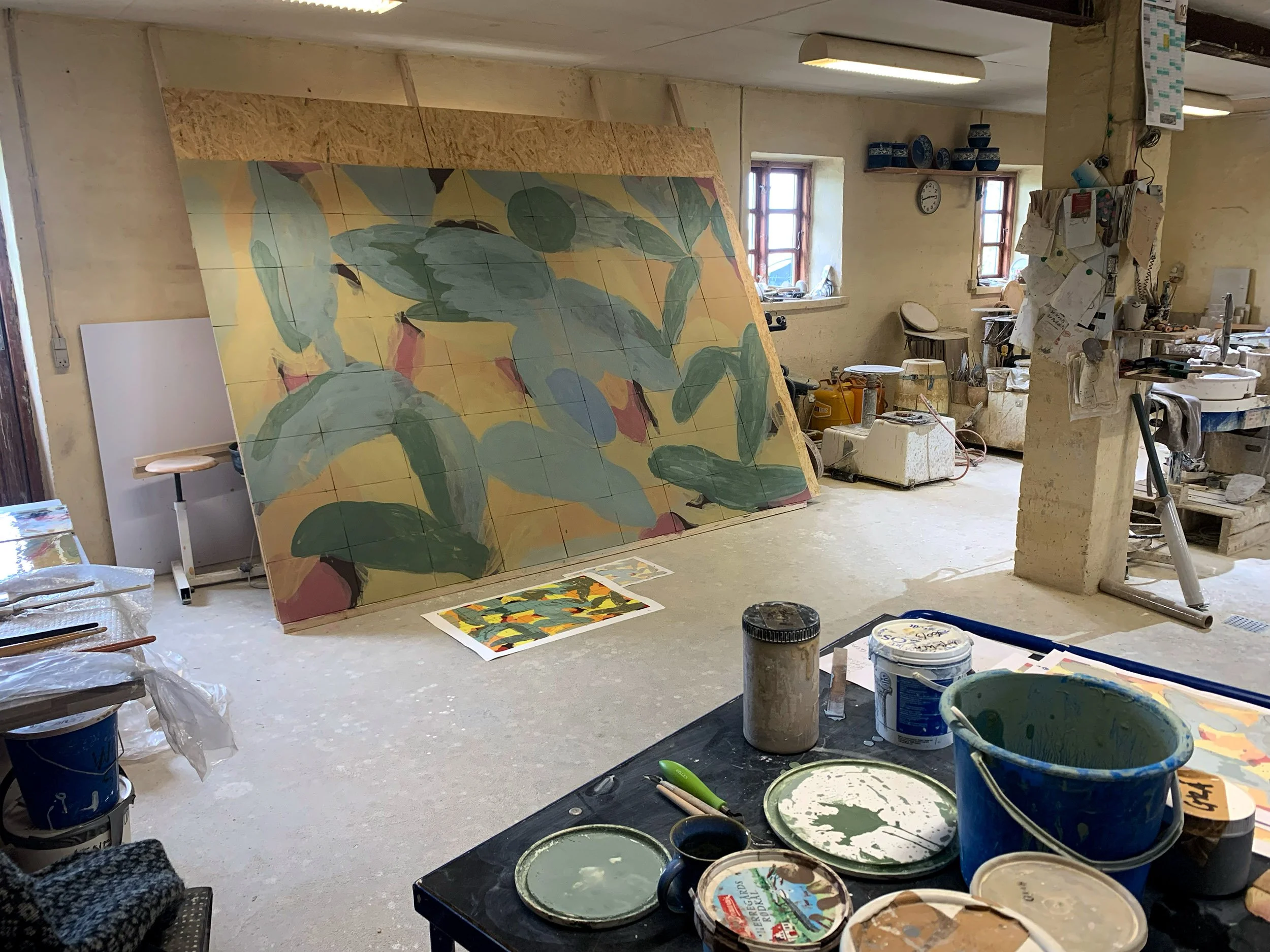
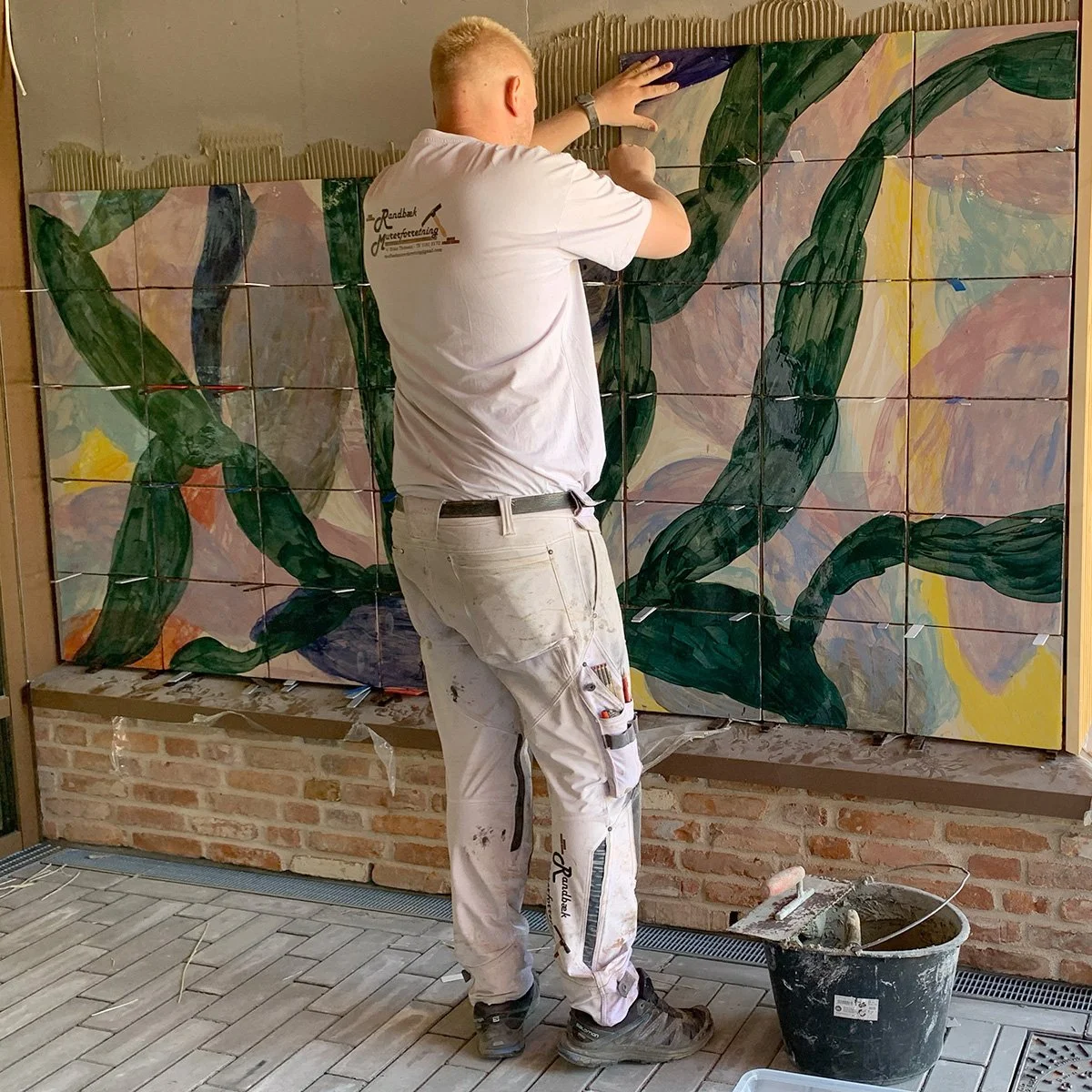
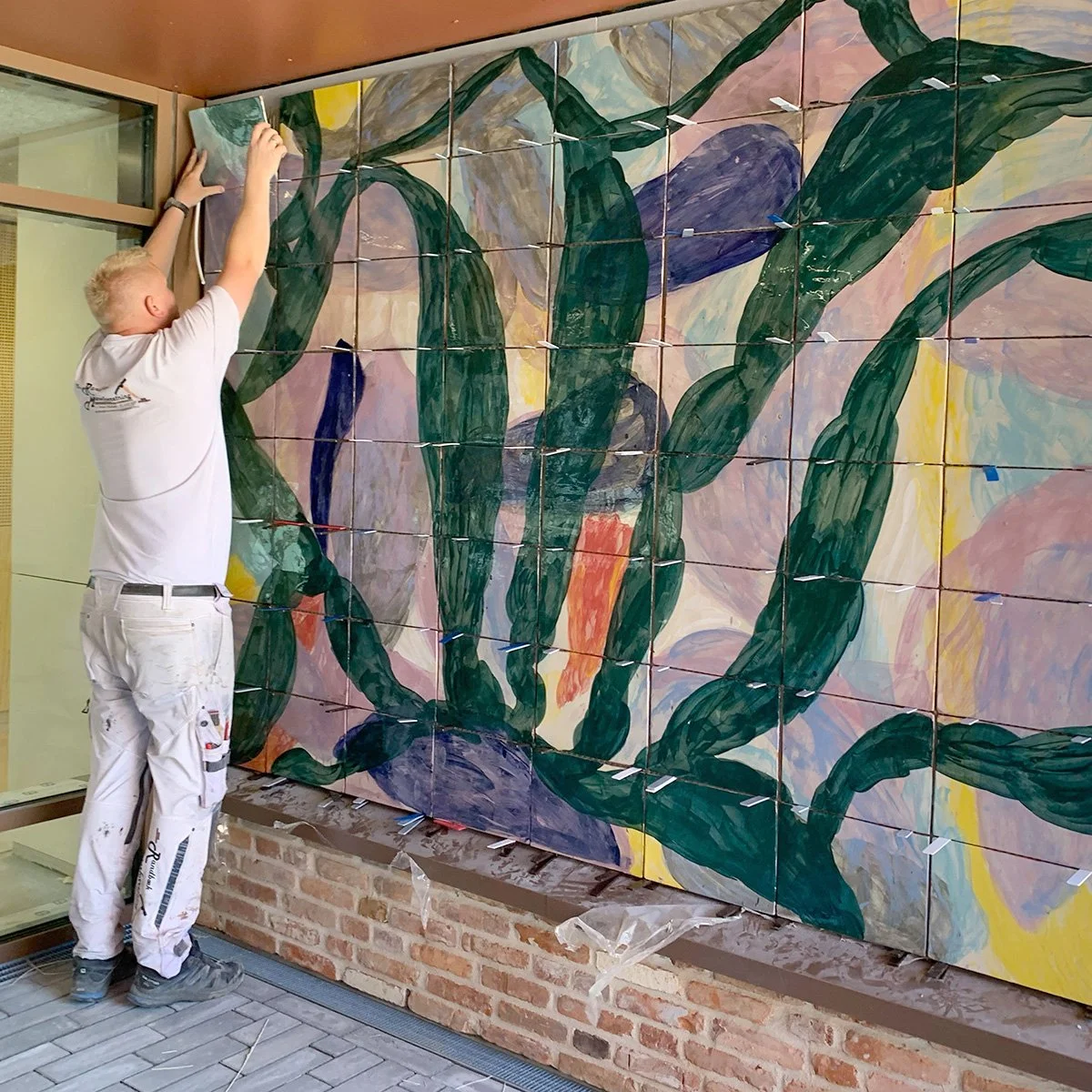
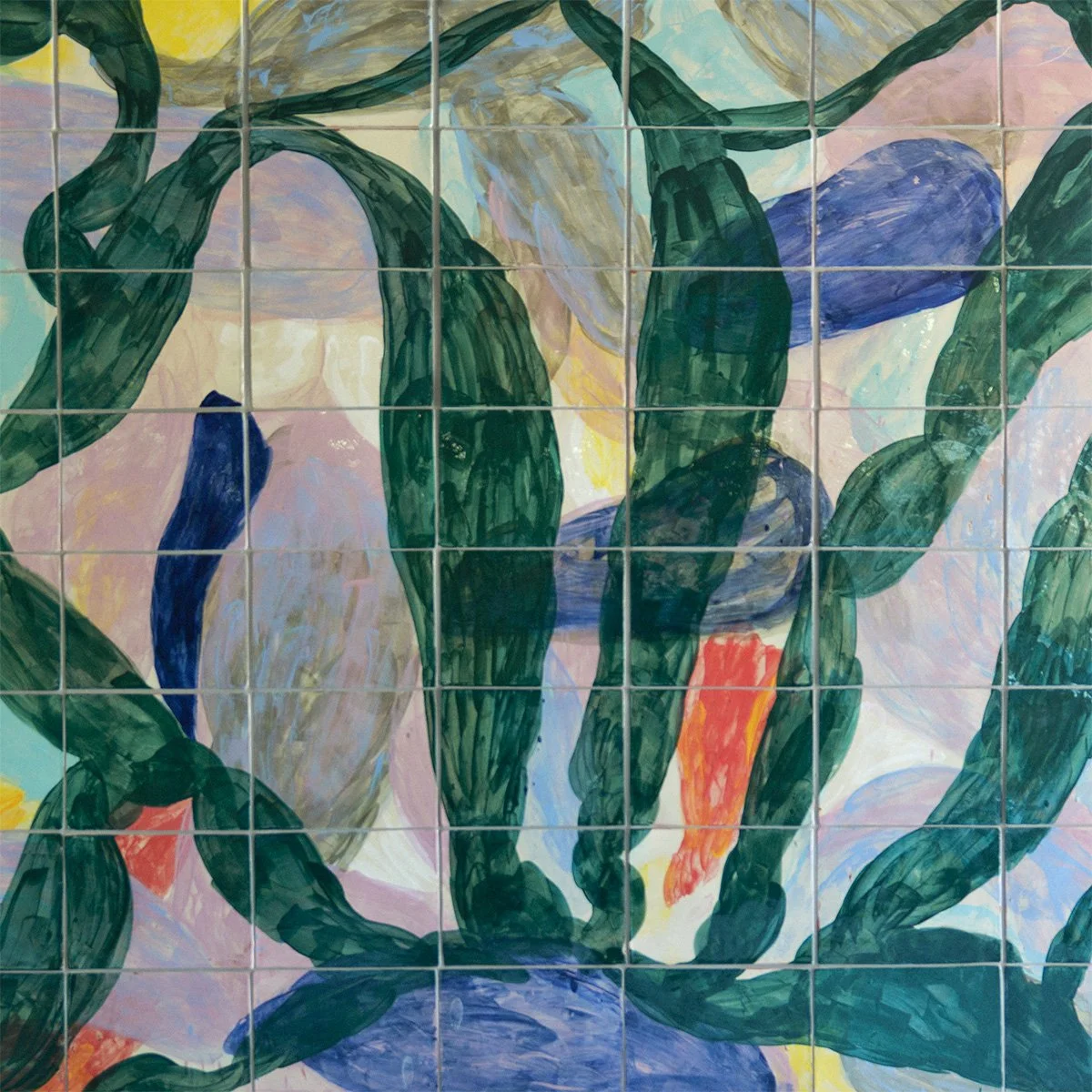
200 x 265 cm. 64 earthenware tiles painted and fired with glaze.
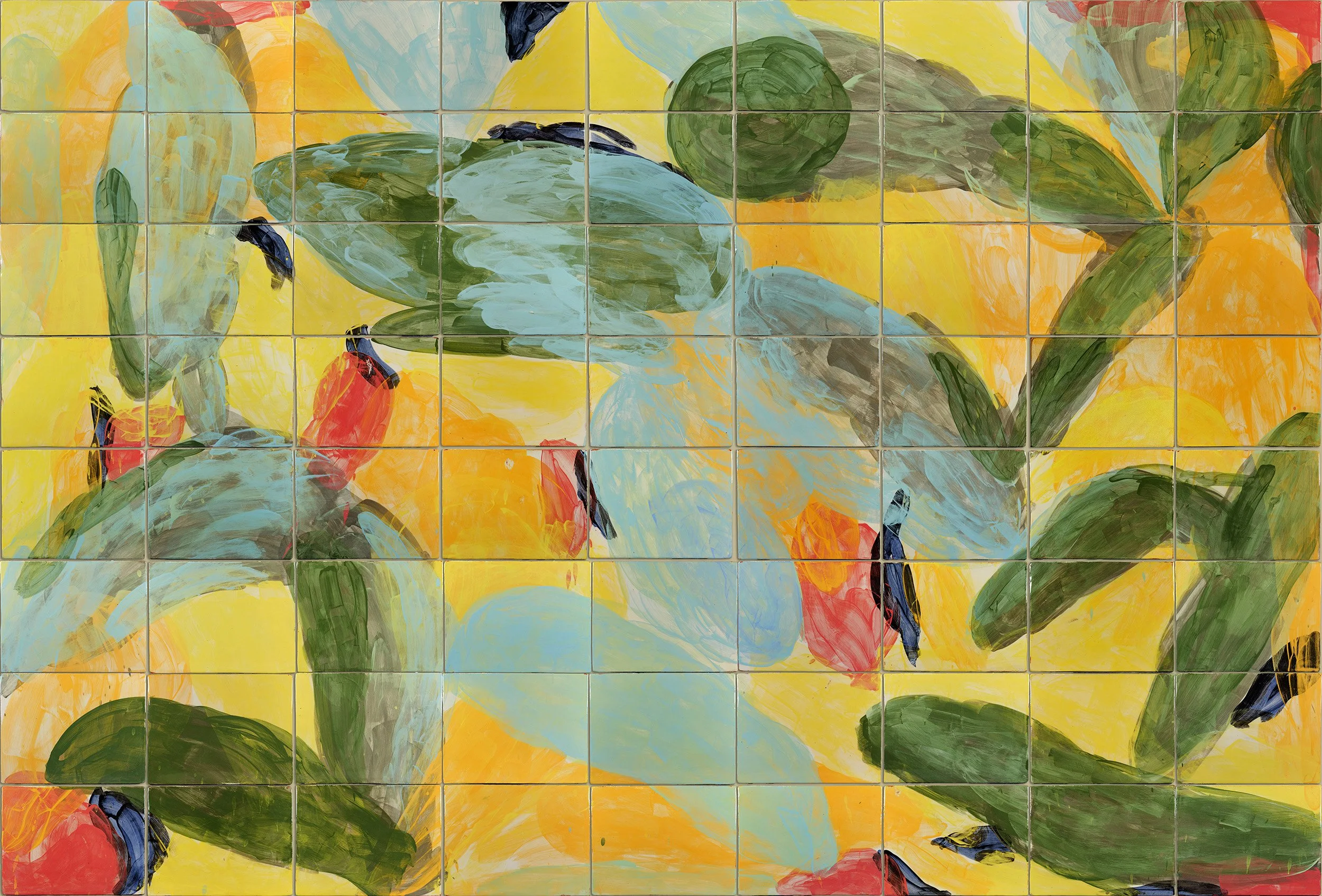
Cycles & Transformation, Part 2
200 x 265 cm. 64 earthenware tiles painted and fired with glaze.
SOLEN lyser SKYER driver VAND løber TRÆER vokser FUGLE flyver BLIKKET vandrer
SOLEN lyser SKYER driver VAND løber TRÆER vokser FUGLE flyver BLIKKET vandrer
CYCLES & TRANSFORMATION
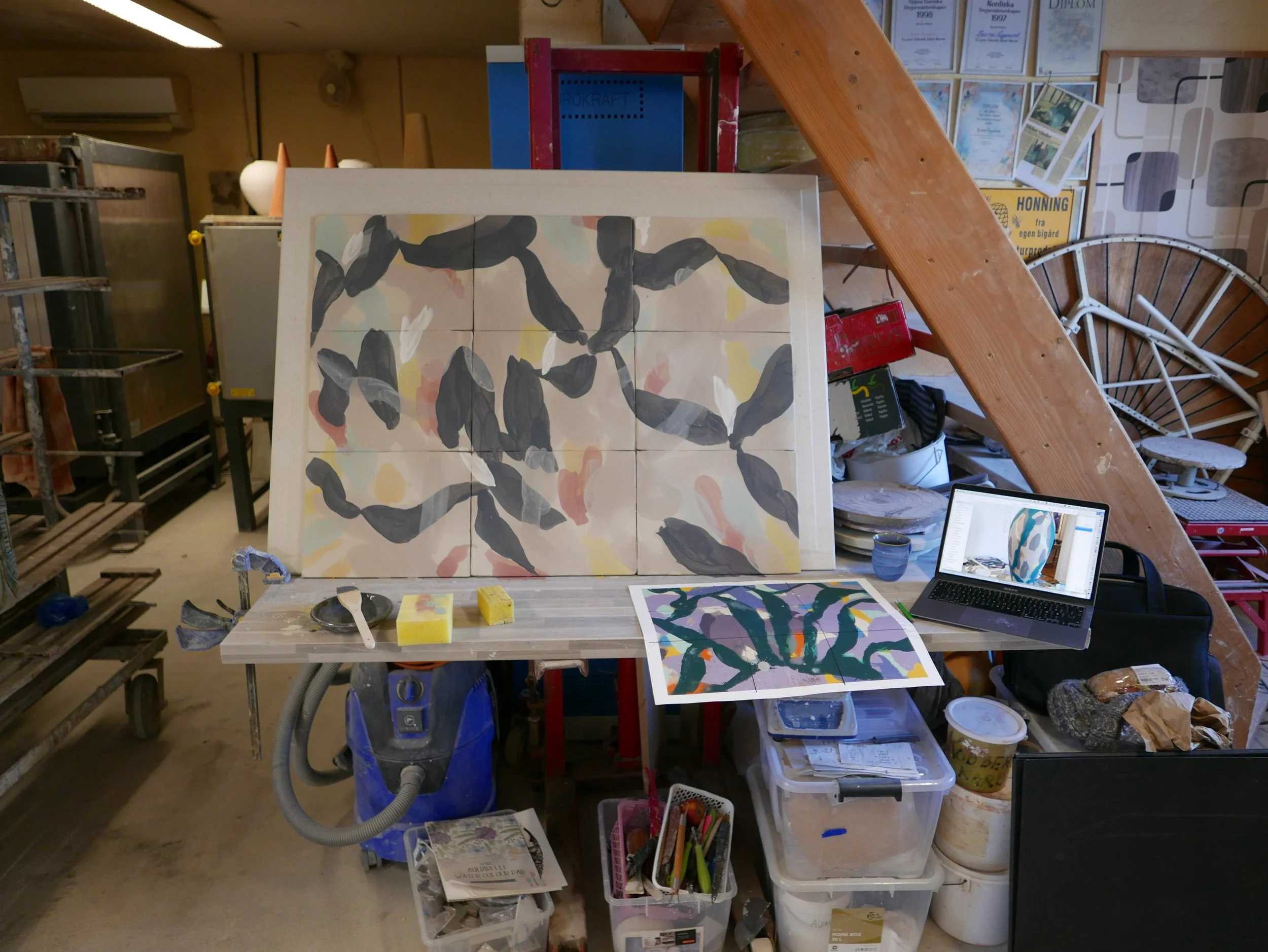
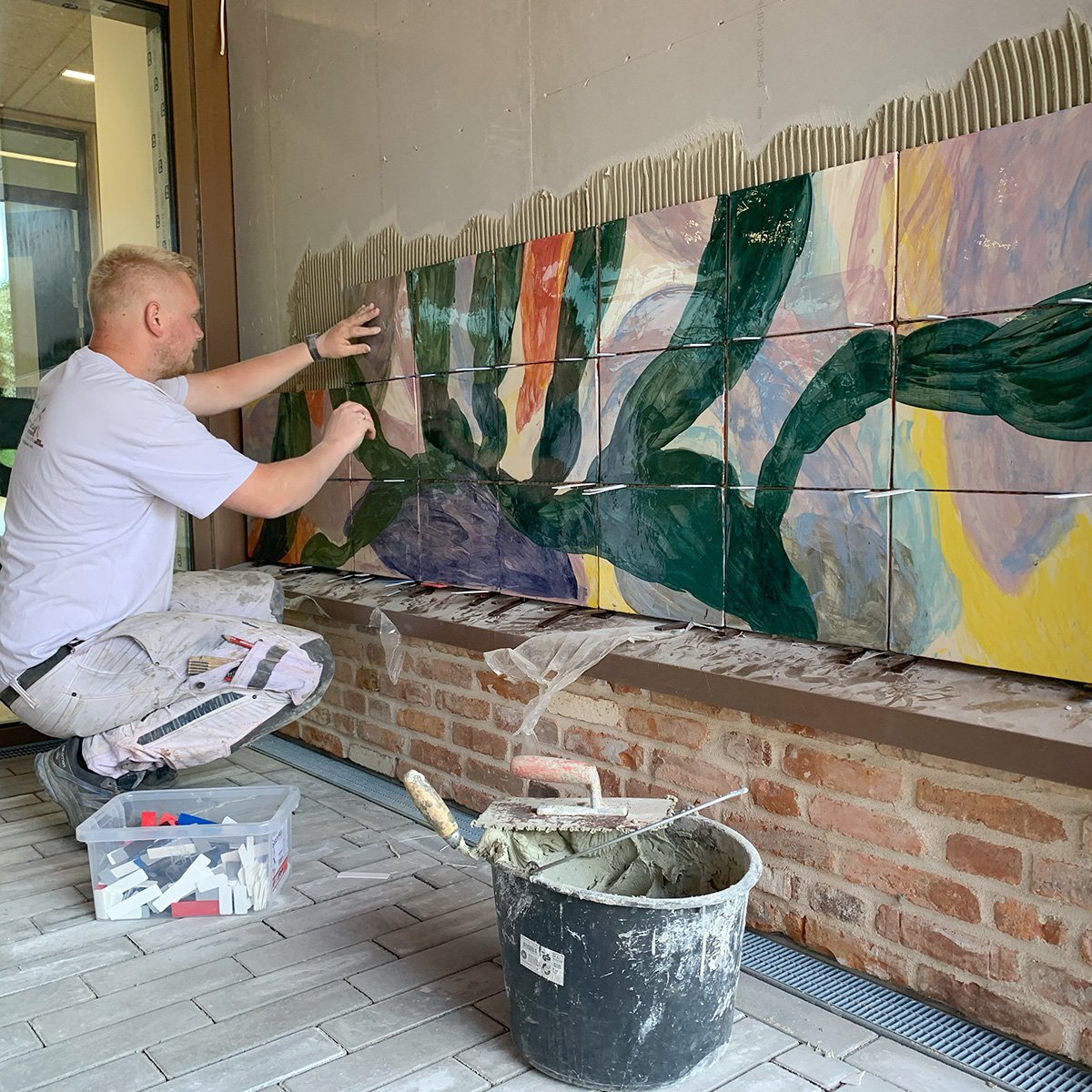
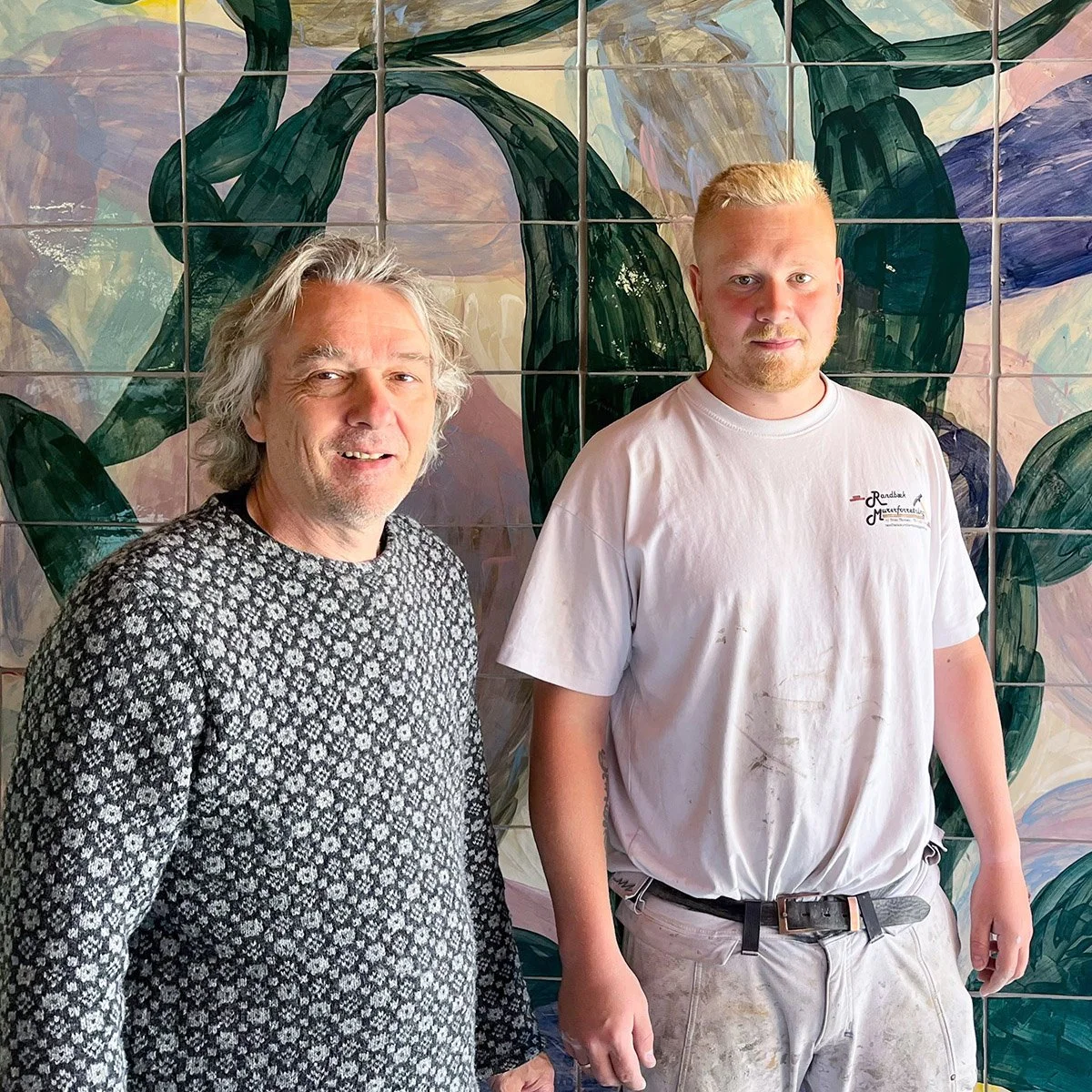
is the title and theme of two large ceramic paintings created for Lysholt. The paintings are based on a winning proposal for a commission at a brand new facility in Ikast-Brande Municipality, Denmark, which is set to open at the end of August 2023. Each approximately 2 x 3 meters in size, the paintings are made of earthenware tiles painted with pickling and fired with a glossy overglaze. They will be mounted on the walls of the building's two larger covered terraces, designed specifically for the house and literally integrated into the building with significant, visible locations.
LYSHOLT is a daycare center with a special school and children's therapy services for 180 children, ages 0–16. The building's single unifying roof embraces all of its activities and covered terraces. These covered areas and entrances give the building a dynamic and vibrant appearance. All areas of the building work together to create a community where there is synergy and joy in living under the same roof.
Construction: Ikast-Brande Municipality, /Gjørtz/Andersen/Architect, Pentabyg A/S / Ceramist: Bjarne Puggaard
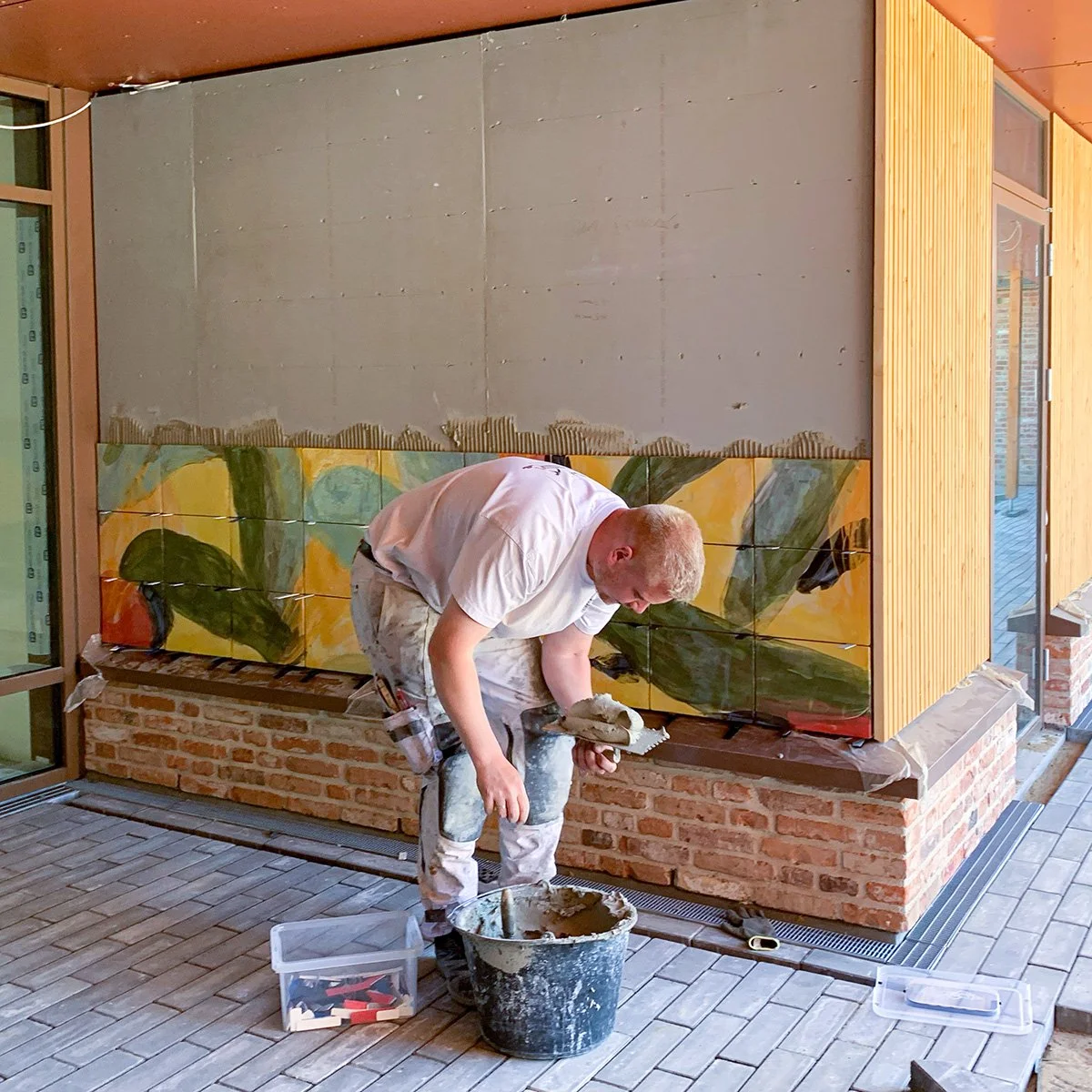
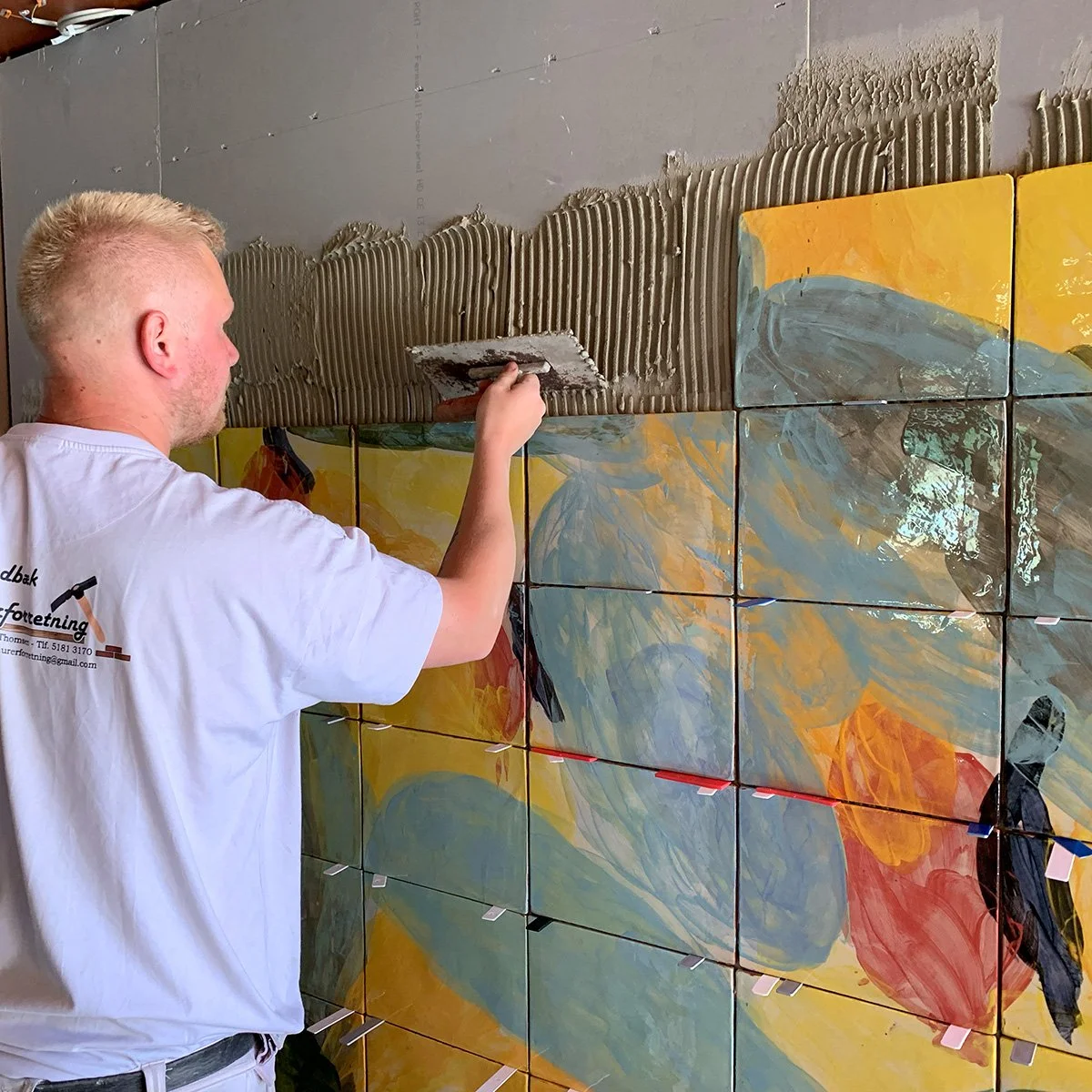
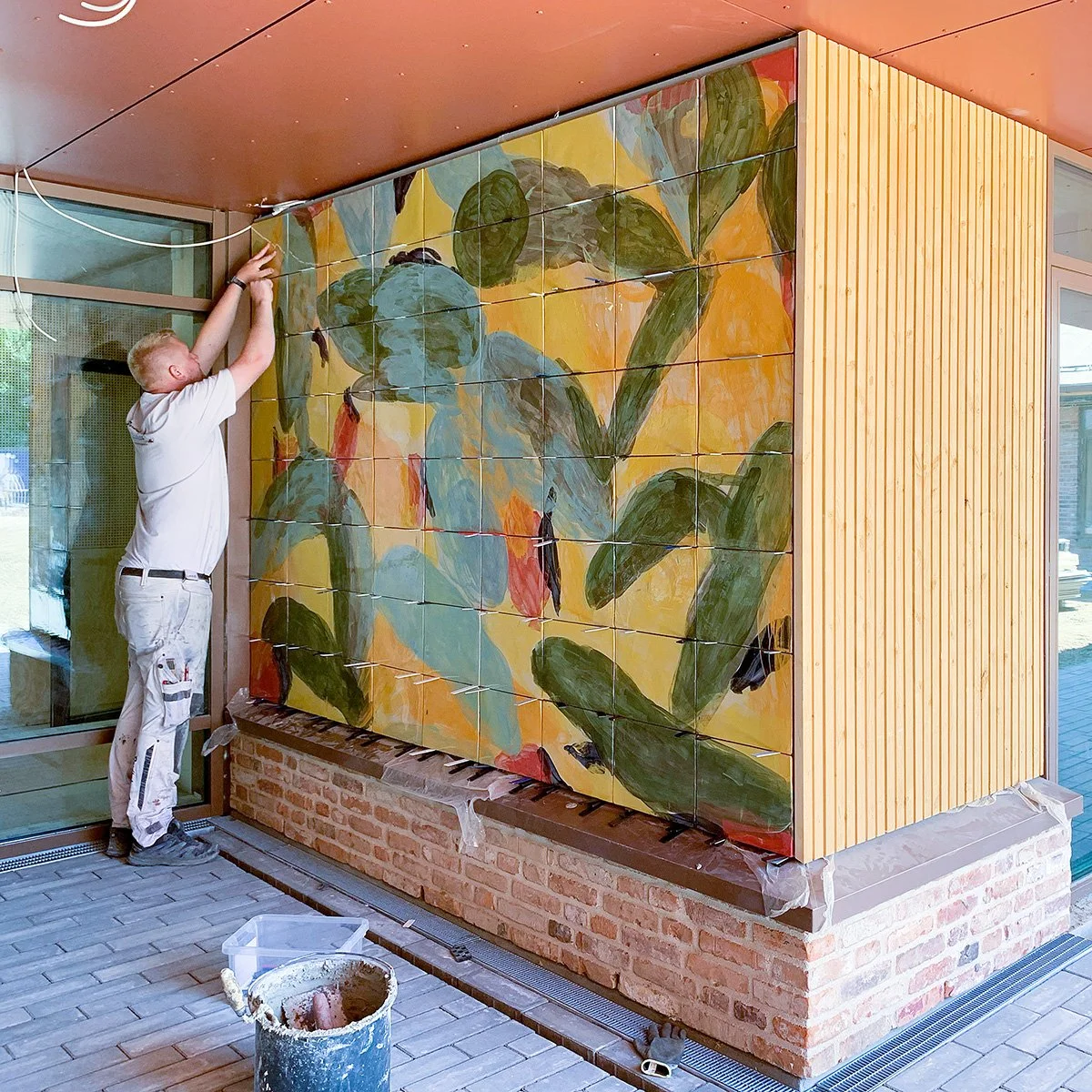
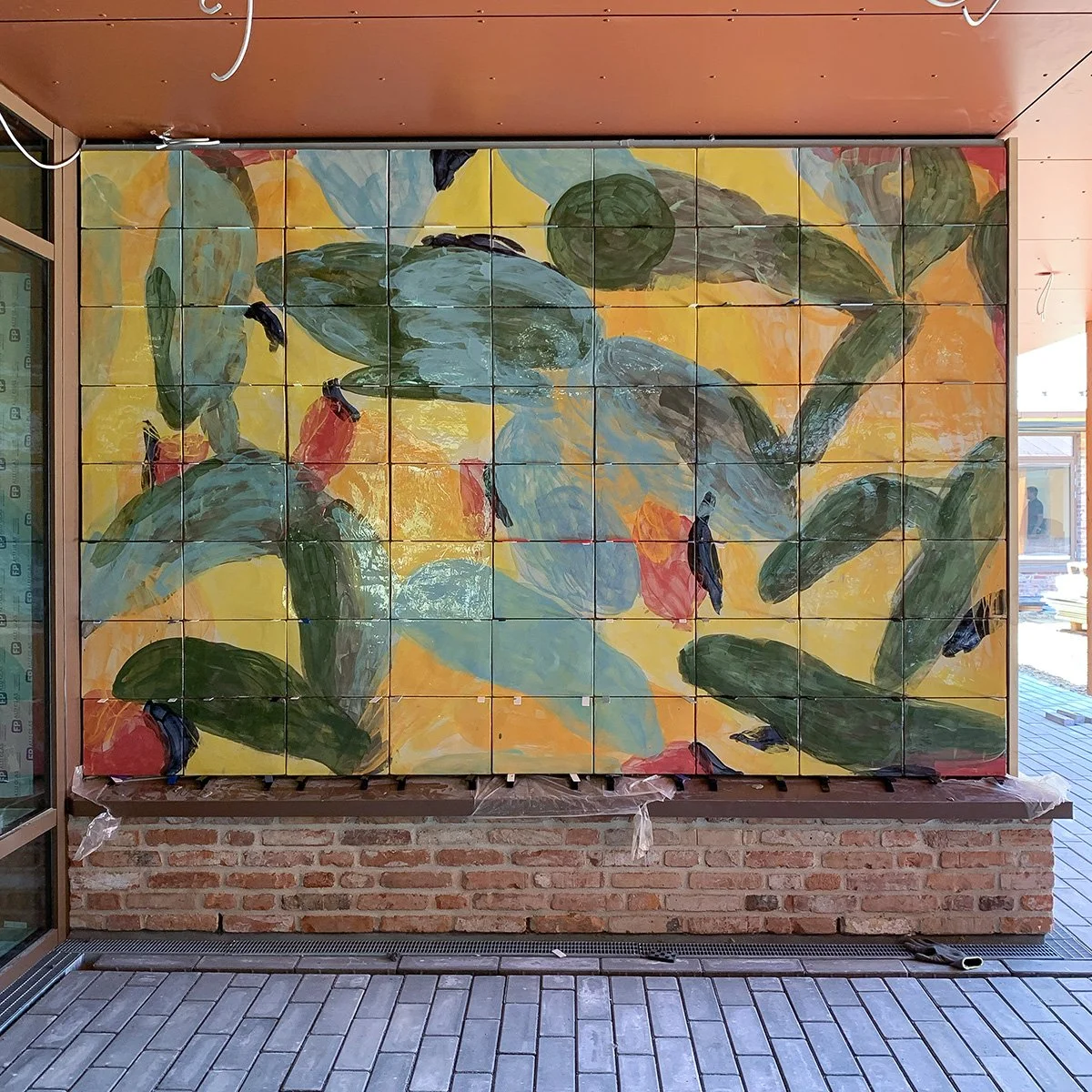
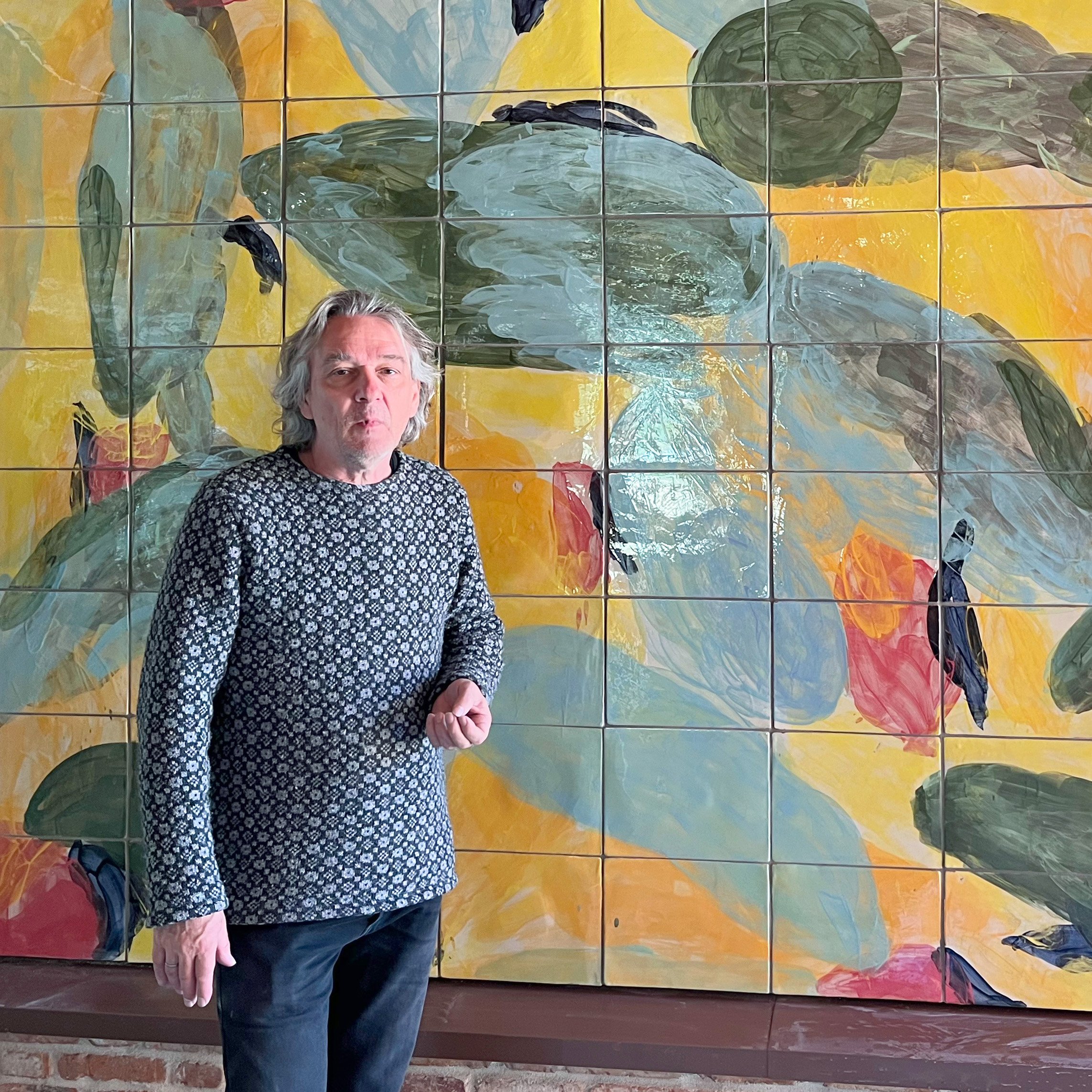
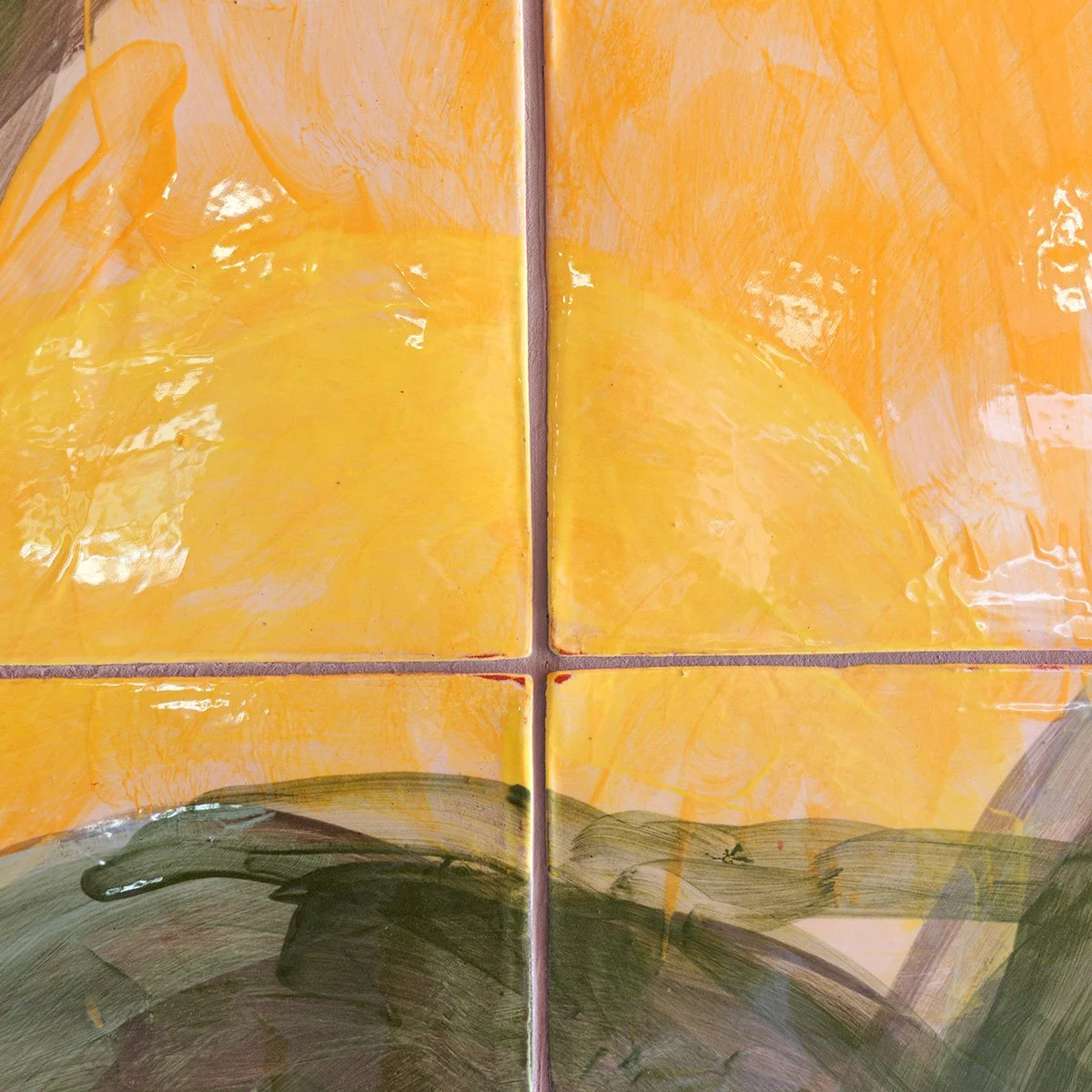
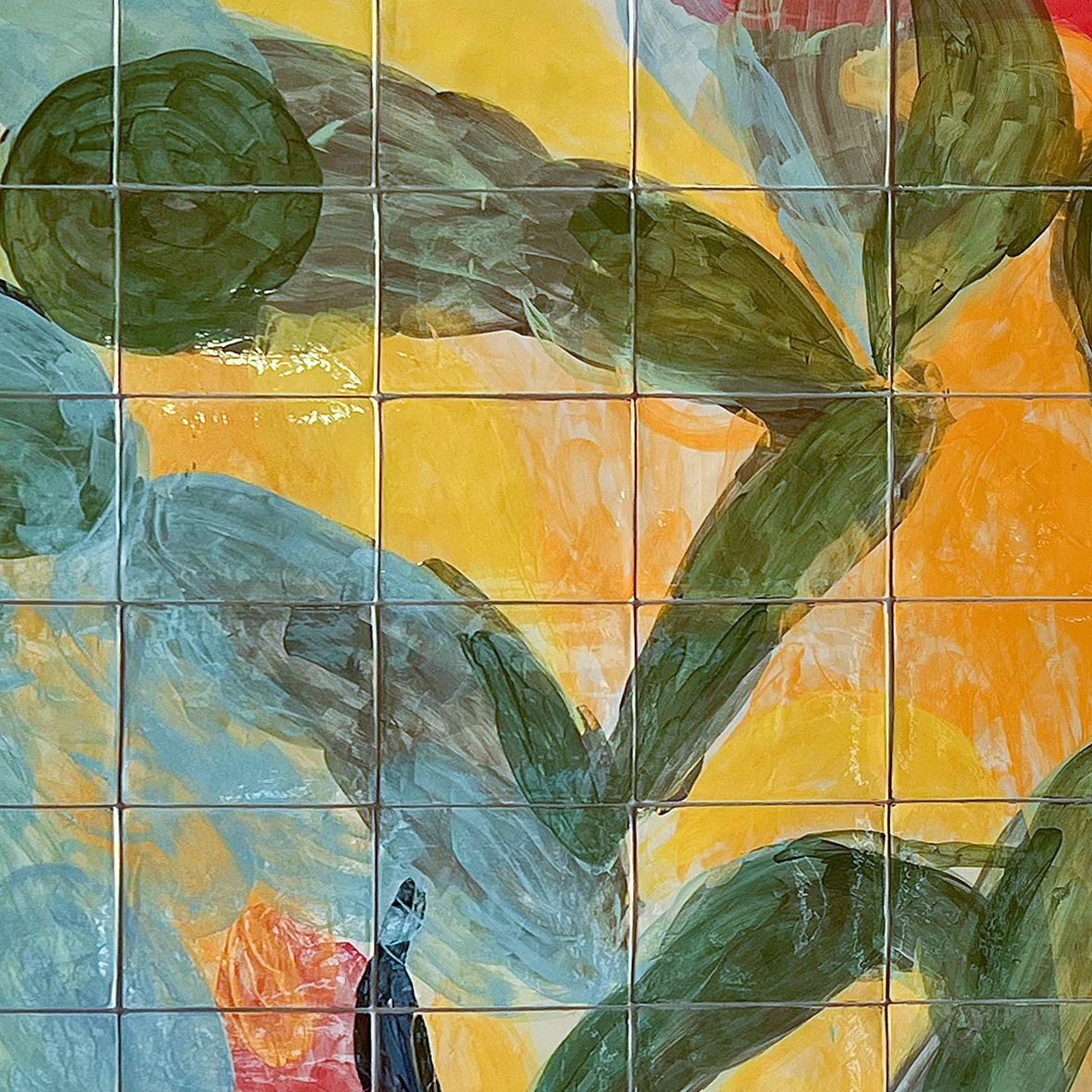
As early as the first meeting in Ikast in spring 2022, the initial idea was to create a ceramic piece for the building.
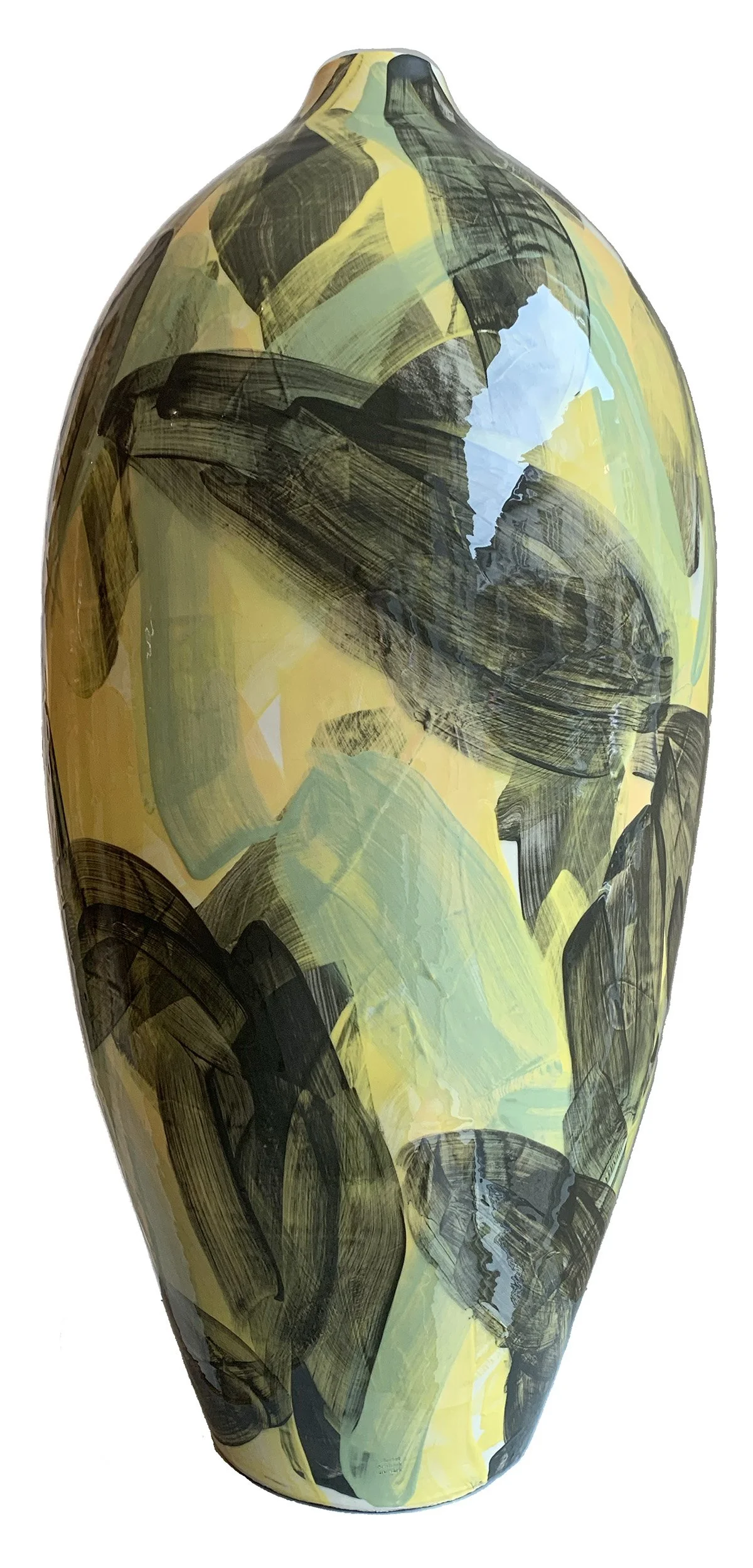
In recent years, I have painted a number of glazed ceramic pots, including the "Hornbækkrukken" at Galleriet Hornbæk. This was a new experience for me, and working with the vases broadened my understanding of painterly possibilities. I have continued to apply this method to my painting.
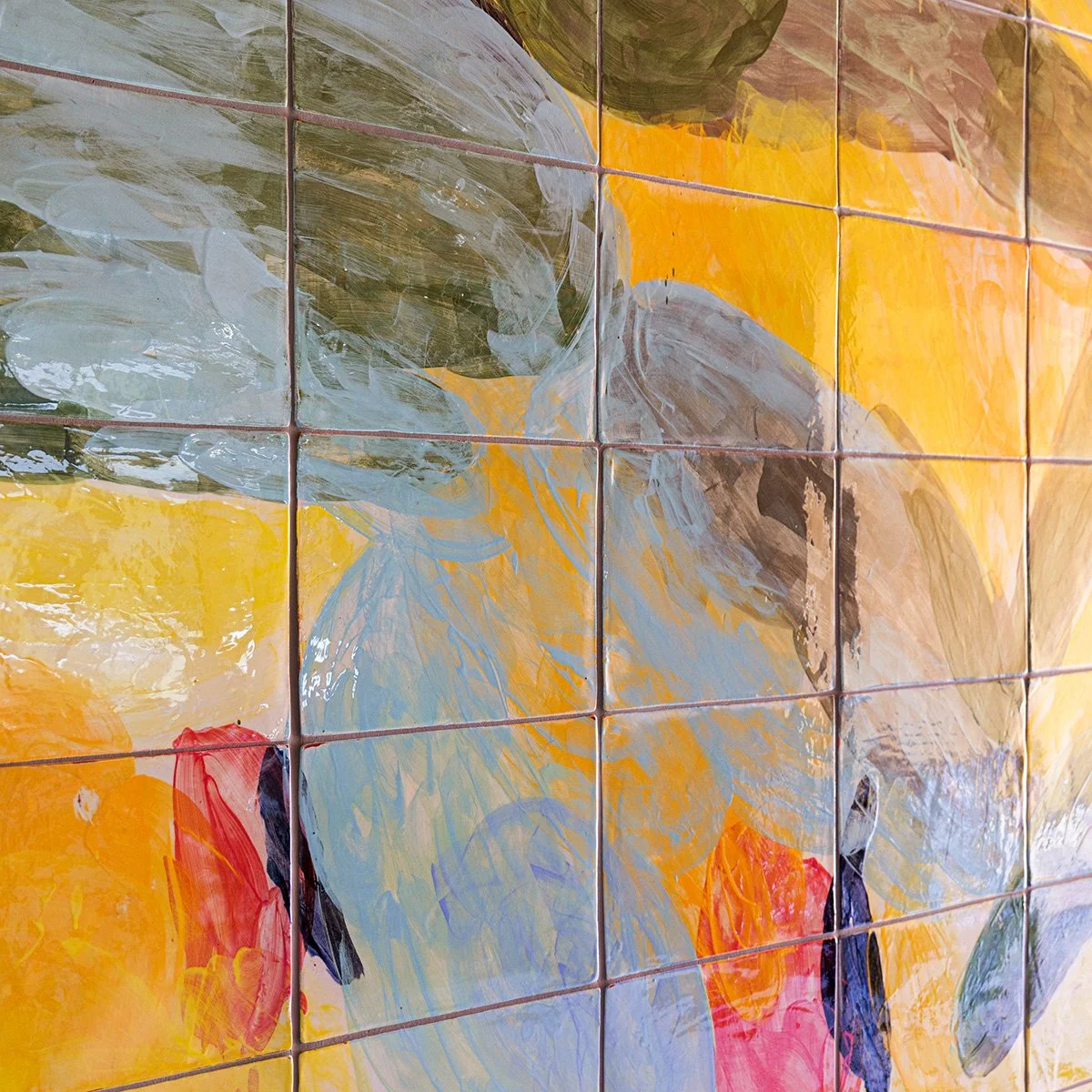
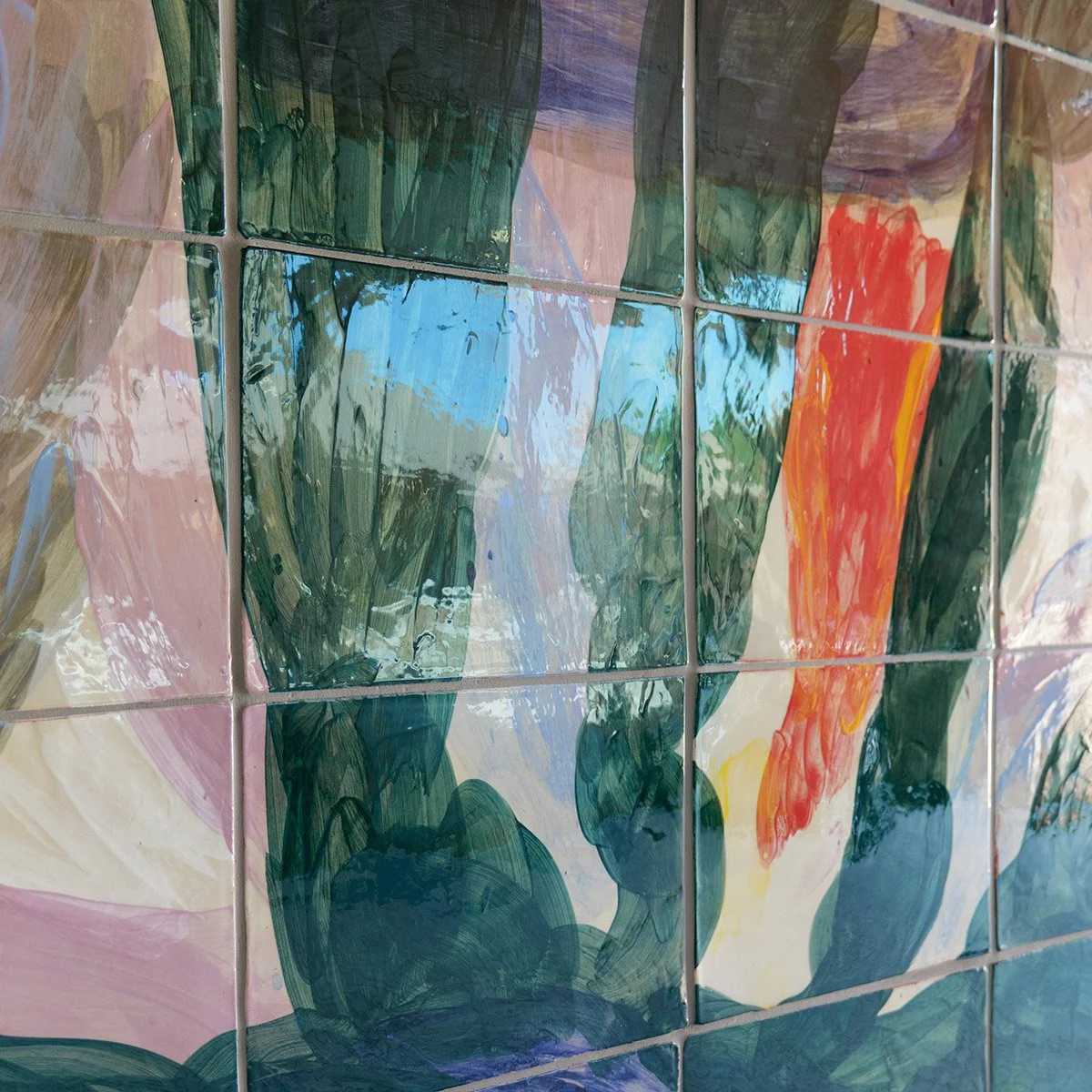
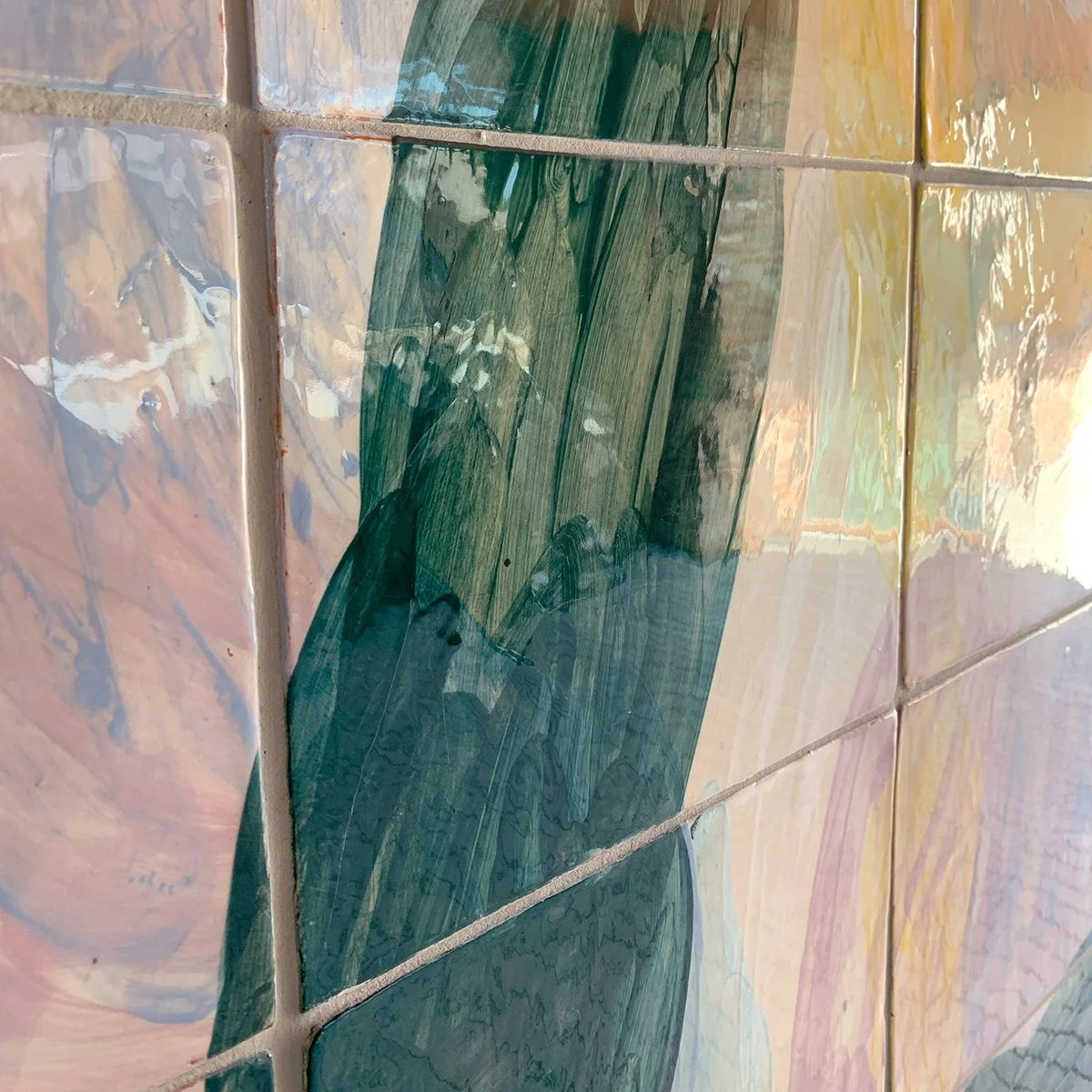
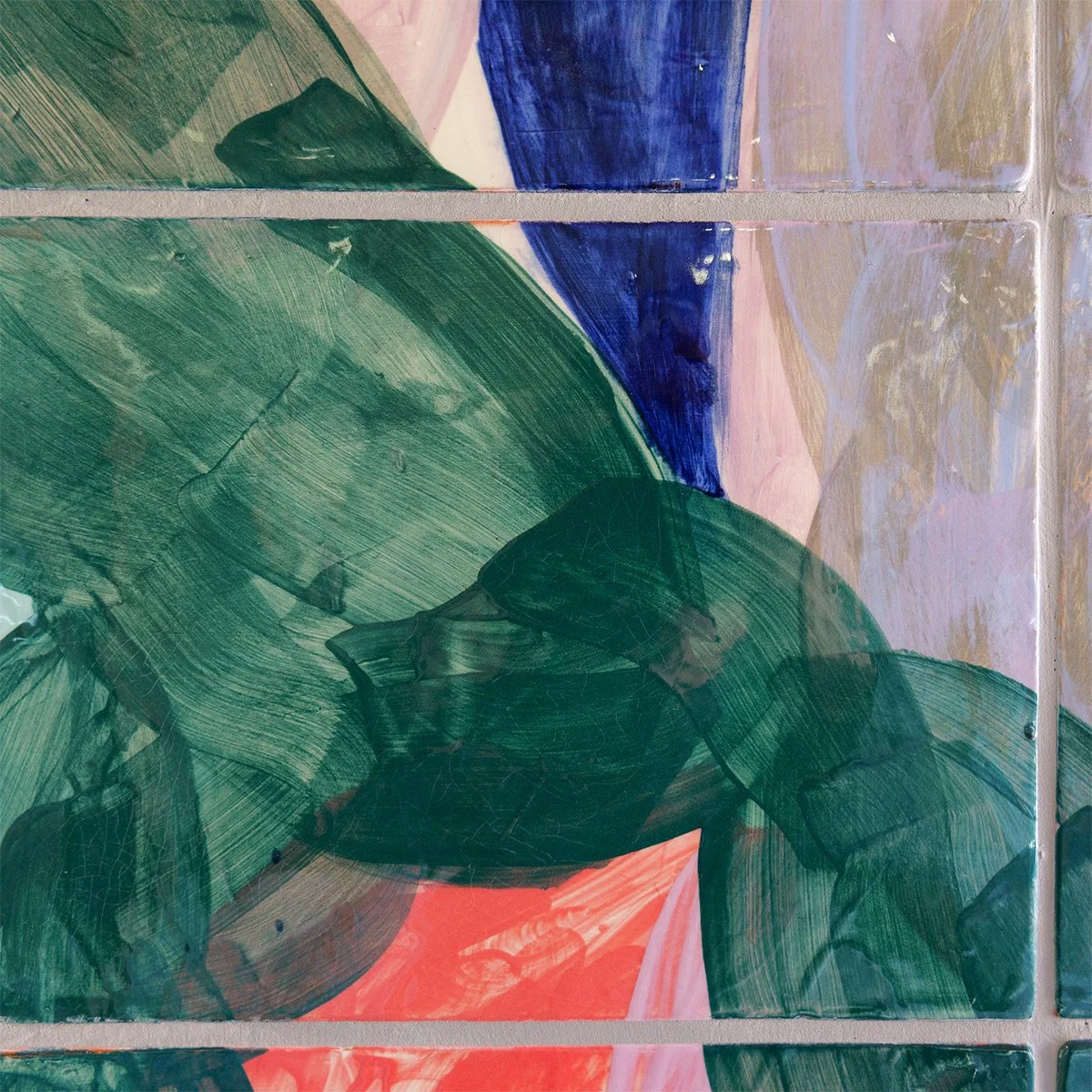
In this context, ceramics consists more of the surface than the form one usually associates with ceramics, such as pots or reliefs. It is ceramic painting as a surface. However, the material has so much "body" that it also has sculptural properties, creating relief-like effects. Slip is a sludgy, muddy substance containing metal oxides that become colored when fired.
This material stands out from others in the house, such as linoleum floors, concrete ceilings, and wood, including plywood panels and door and window frames.
It blends easily with other materials so that it does not appear as a striking contrast but rather supports a more organic expression in the building.
When treated with an overglaze, the material appears organic and shiny, and the reflections cause the work to appear differently depending on the lighting and your position in relation to it. It is also robust and not easily damaged. It contributes to a long-lasting, high-quality aesthetic.
The ceramic painting can be large-format and clearly seen and felt from a distance. However, it can also be viewed up close, revealing fine details in its execution. It can also be physically touched without problems, which is a valuable feature in an institution with small children.
The ceramic painting can be viewed in a large format and can be clearly seen and felt from a distance. It can also be viewed up close, revealing fine details in the execution. It can also be touched without causing any damage, which is a valuable feature in an institution with small children.
PLACING
Almost all of the interior walls are acoustic panels or sound walls, so it's virtually impossible to hang anything.
However, I noticed some prominent walls that are clearly visible from inside the building. These walls are located in the covered decks, which are in two places in the building: One is at the north end entrance and the other is at the south end of the common room. These patios also have glass doors on the inside. For me, these areas are focal points for moving around the property.
Due to the window sections facing the walls, these two walls are clearly visible from inside the house and become an integral part of the interior. The terraces are under the house's overall roof and are therefore part of the house itself. This area serves as a transition between the inside and outside and visually connects the inside with the view outside.
The artwork marks this relationship and has several functions. If you see it from inside, you are "invited" outside. If you see it in passing on your way into the building, you know you are entering. It can also give you the opportunity to stop, feel, and reflect.
Floor plan of Lysholt with the location of the ceramic paintings marked in red.
Visualizing the Painting Placement - From the project presentation.
MOTIVE
From One Springs the Other
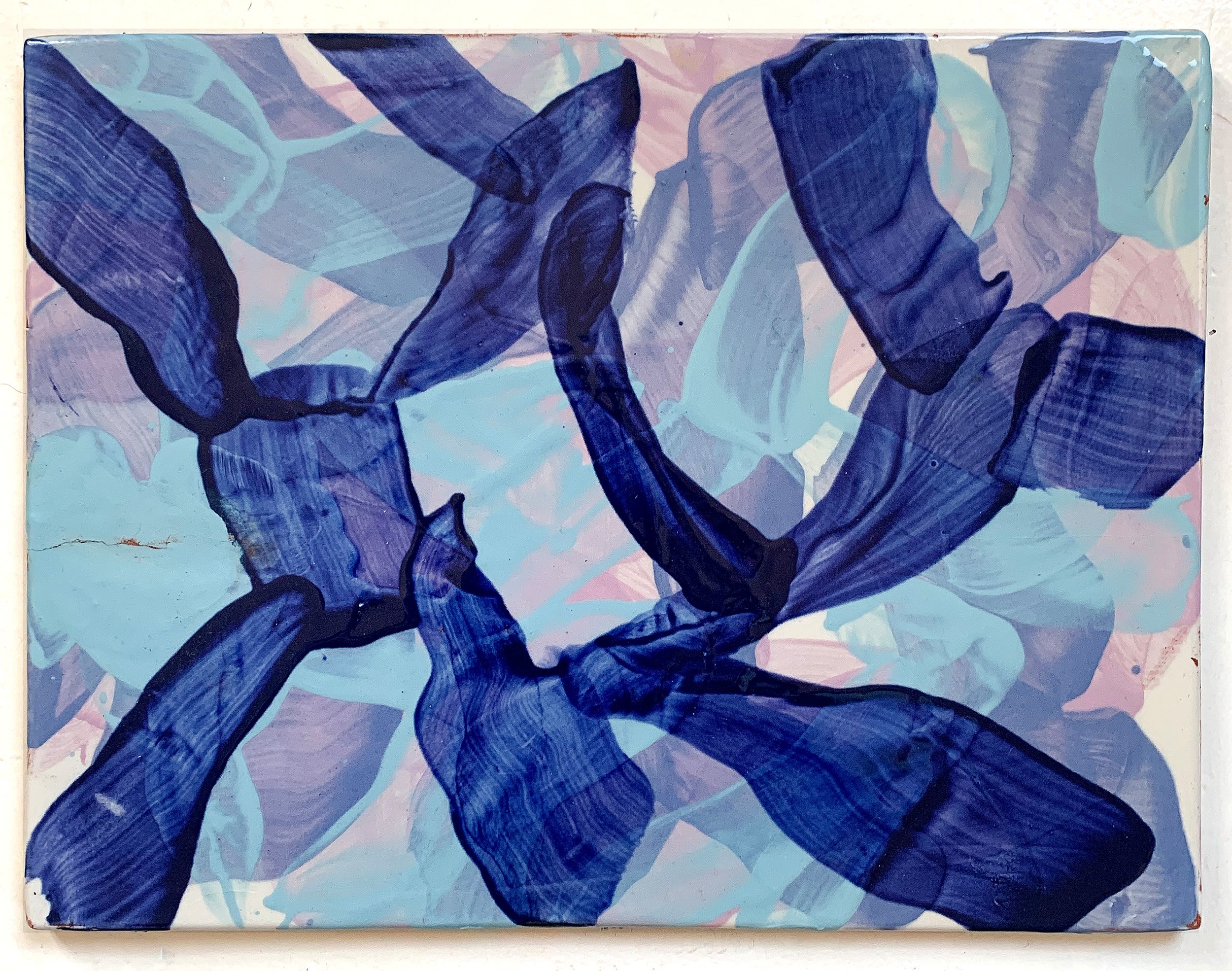
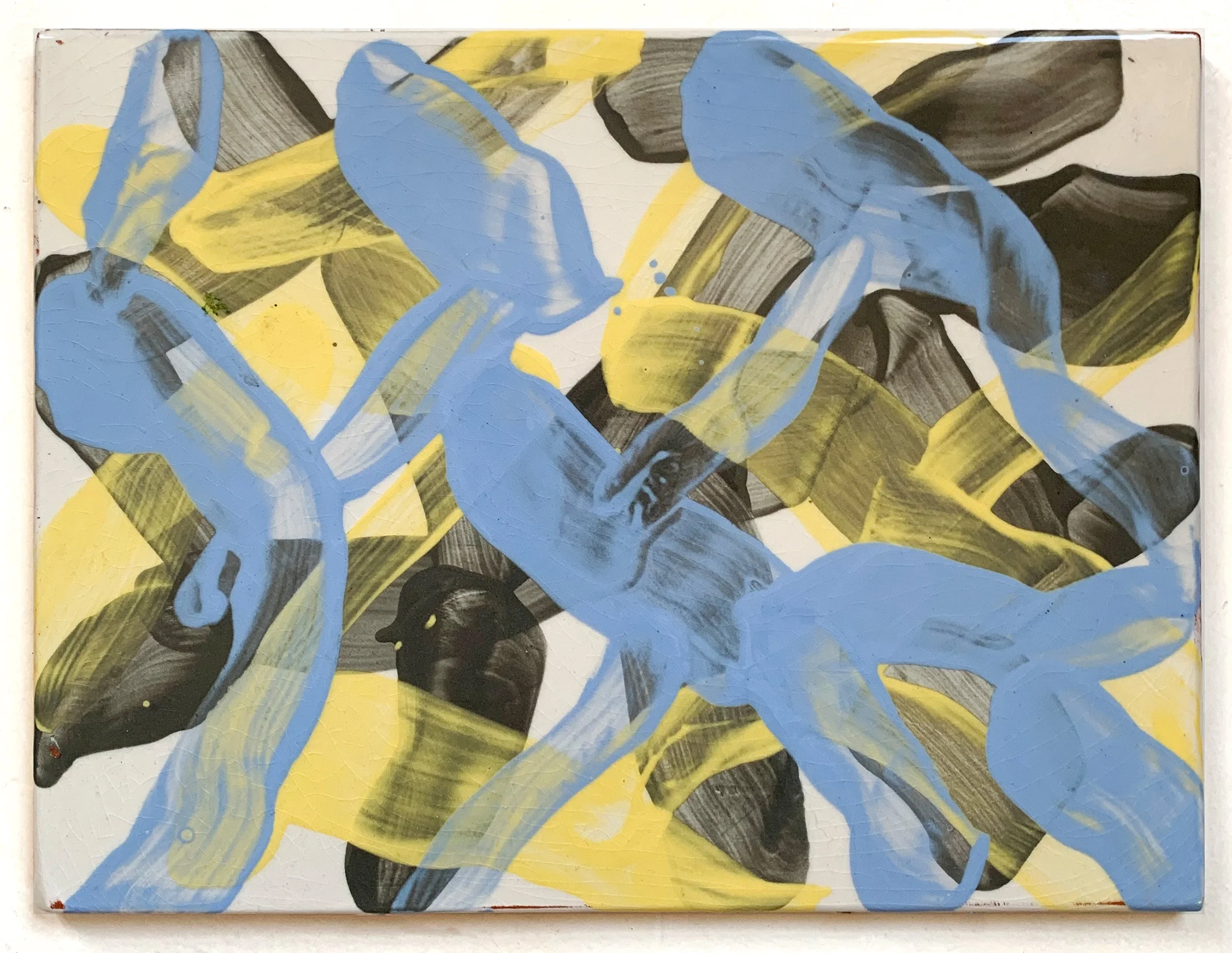
The imagery is based on compositions that were created as small oil paintings in the spring of 2022.
While they are abstract, it is clear that they are related to nature. An organic expression is evident throughout.
Organic forms meet, partially conceal each other, collide, and connect to create something new. There are movements in networks of organic patterns. In this way, the images provide a backdrop for new thoughts. They challenge interpretation and reflection each time they are seen.
There are repetitions and variations, as in nature and music. A temporality is at play, contributing to the sense of movement and change associated with nature and the body. In the paintings, the brushstrokes remain visible, so the physical presence of the artist is evident in the finished work. This temporality gives an experience of body, movement, and change, just as nature is constantly moving and changing.
The surface of the painting is important because it constitutes the space in which the work is created. However, the delimitation is also limitlessness because the individual image is connected to something beyond the frame. In this case, the other image is located elsewhere in the building. Thus, each image becomes part of a larger context, connected yet separate.
The geometric yet organic structure of the images has been slightly altered, making all the elements appear crooked and irregular. When you look at the pictures, you wonder what you're actually seeing. It becomes impossible to maintain multiple perceptions at the same time. You either see a figure or a background in the layers of the composition.
To me, the background is linked to a lifetime of studying and rendering the lines, patterns, and colors of landscapes and bodies. Together, these elements form a repertoire of organic formal phenomena deposited in the hand's repeated appropriation of the lines, curves, meanderings, harmonies, and disharmonies of the body and landscape. This collection of basic forms is repeated, combined, and varied to create new forms and expressions.
In an abstract painting, the balance between sign and image is akin to the dynamic interplay of form and content. Organic forms and gestures convey spontaneity and improvisation, and geometric shapes and patterns add structure and order to the composition.
Overall, the relationship between sign and image is a dialogue between the artist's intuition and the viewer's interpretation. It is an invitation to engage with the painting in a playful and open way.